
![Malaysian property’s appeal explained with data [2026]](https://klfudousan.rexilion.com/wp-content/uploads/2026/09/malaysia-fudousan-e1788432130847-4073d877.png)
When considering property in Malaysia, factors to compare include natural-disaster risks, population, economic growth, housing prices, foreign ownership conditions and travel connections. This guide uses Japan as an example for some comparisons; buyers based elsewhere should consider how these factors apply to their own circumstances.
Using the latest available data as of 2026, we explain the main reasons people choose Malaysian property in six parts.
1. Lower natural-disaster risks than Japan
When assessing Malaysian property, one factor to consider is the different natural-disaster risk profile.
Japan frequently experiences major earthquakes, tsunamis and typhoons. Malaysia, by contrast, is not a region of frequent major plate-boundary earthquakes like Japan and lies outside the main typhoon tracks.
Compared with Japan, the relatively lower risk of major earthquakes and direct typhoon strikes is a feature both for living and for holding assets in a different region.
Monsoon floods, flash floods and landslides occur, so check the specific area and surroundings of a property before buying.
Reference: National Disaster Management Agency Malaysia (NADMA), National Risk Register
2. More than 34 million people and a substantial working-age population
The Department of Statistics Malaysia (DOSM) estimates the 2026 population at about 34.4 million. People aged 15–64 account for 70.4%, and the median age is 31.7.
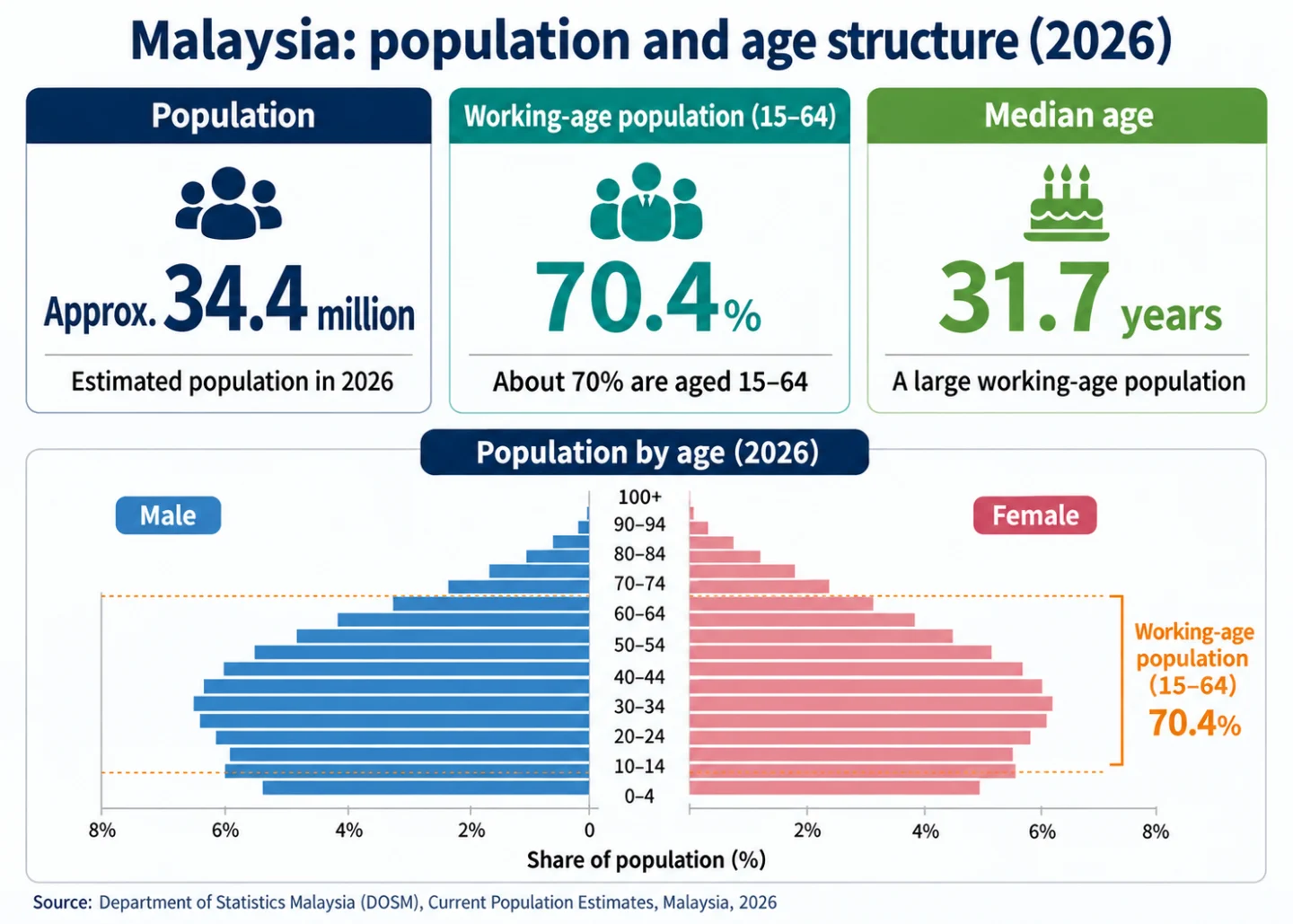
Demographics are a fundamental factor when considering long-term housing and rental demand.
Source: Department of Statistics Malaysia (DOSM), Current Population Estimates, Malaysia, 2026
3. Malaysia’s continuing economic growth
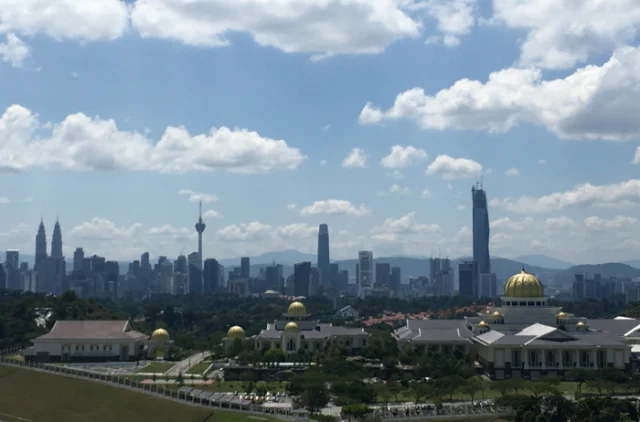
Malaysia’s real GDP grew in 2025 by 5.2%. Services led continuing growth, while construction also recorded a strong increase.
Real GDP growth in 2025.
A major industry supporting the domestic economy.
Urban development and infrastructure construction continue.
Greater Kuala Lumpur is seeing new business hubs such as TRX, railways, commercial facilities and housing developments. These urban changes also affect nearby residential demand.
Even within Kuala Lumpur, supply, tenants, rents and prospects differ by area and property.
Source: Department of Statistics Malaysia (DOSM), Gross Domestic Product 2025
4. Accessible price levels compared with major Asian cities
Housing prices relative to major Asian cities are one feature of Kuala Lumpur property.
Global Property Guide’s July 2026 indicative prices per square metre put Kuala Lumpur below Tokyo, Singapore and Hong Kong.
| City | Indicative price per square metre | Coverage |
|---|---|---|
| Hong Kong | US$23,255 | Apartments |
| Singapore | US$17,715 | All Dwellings |
| Tokyo | US$5,305 | Resale Apartments |
| Kuala Lumpur | US$2,628 | Luxury Apartments |
Different sample coverage prevents a simple like-for-like city comparison, but at the same budget Kuala Lumpur offers scope to compare location, space and quality.
Look beyond price alone to the locations and units available within your budget.
Source: Global Property Guide, “Square Meter Prices in Asian Cities”, updated July 2026
Property types and calculation methods differ between cities; figures are provided as indicative market comparisons.
5. Foreigners can own property
Malaysia permits foreign buyers to own property if they meet the relevant conditions.
Minimum prices and eligible property types vary by state. Buyers must also consider stamp duty, legal fees and, on future disposal, RPGT (Real Property Gains Tax).
Rules and tax rates change, so consult the dedicated articles for current details.
An explanation of stamp duty, legal fees and other costs.
An explanation of housing loans for foreigners.
An explanation of Real Property Gains Tax.
6. Just one hour’s time difference from Japan

When buying overseas property, ease of managing it remotely afterwards is another important factor.
Malaysia is only one hour behind Japan, making communication with local property agents and managers possible within largely overlapping business hours.
Direct flights connect Japan and Kuala Lumpur, making visits practical while keeping Japan as your base. This also suits people considering future relocation or living between two countries.
What to assess when buying Malaysian property
When buying, consider population and economic growth as well as who is likely to live in the property.
Check who lives there and which unit types they choose.
Compare location, price, layout, management and competition from nearby properties.
Consider own use, rental operation and eventual resale.
Rather than presenting large numbers of listings, KL Fudousan selects options for your purpose using knowledge gained through local sales, rentals and management.
Find Malaysian property
Browse purchase options handled by KL Fudousan.
We arrange local visits for those who want to assess areas and properties in person.
We discuss your budget, purchase purpose, preferred area and future plans, then recommend suitable options beyond just the properties shown on the website.
This article is based on public information available on 3 September 2026. Property markets, taxes and foreign-buyer conditions may change. Confirm current information when buying or selling.
Main references
Department of Statistics Malaysia(DOSM)「Current Population Estimates, Malaysia, 2026」「Gross Domestic Product 2025」
National Disaster Management Agency Malaysia(NADMA)「National Risk Register」
Global Property Guide「Square Meter Prices in Asian Cities」(July 2026)